


Page 16 - Volume 16 Number 2
P. 16
became simpler for both pilots and maintenance technicians.
And so, the Cessna 421 market is divided into roughly three, possibly four, categories. The least desirable 421s would be the short-nose, short- wing 1968 and 1969 models, followed by six years of the long-nose, longer- wing 421B Golden Eagle, and finally
the 1976 to 1985 wet-wing 421Cs, of which the first three years had the earlier “straight-leg” maingear, exchanged for trailing-link gear in 1980. After 1982, the tide turned for the big-cabin piston market; no 421Cs were delivered in 1983, only 13 were sold in 1984 and a mere 7 were made in 1985, when production ceased.
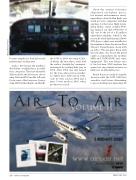
Given the current economics (depressed used-plane prices, low interest and insurance rates), upgrading a clean Golden Eagle can result in a very competitive traveling airplane for the lower flight levels. Brian Henry, owner of 421C #500, has figured out that $500,000 of 421 can do the job of a $2 million equivalent airplane, which is the reason he’s had dual Garmin G600/ SVS glass-cockpit gear installed in his airplane at Penn Avionics in West Chester, Pennsylvania, along with an S-Tec 55X autopilot. Even with his new glass, the broad 421 panel easily accommodates his Avidyne MFD and 530W/430W and other equipment. The way Henry sees it, his low-time 1982 airplane has gained an expotential increase in utility for an affordable price.
Frank Bonacci reached a similar decision with the 1977 421C he’s owned for over 18 years, determining to proceed with proper upgrading. He
14 • TWIN & TURBINE
FEBRUARY 2012
brian Henry Photo


