


Page 20 - Volume 17 Number 11
P. 20
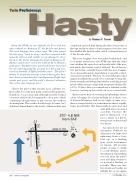
Twin Proficiency:Hastyby Thomas P. TurnerH270° 4.8 NM from FAF6962 X 100A5From the NTSB: At (an altitude of) 50 to 100 feet after takeoff on Runway 17, the Beechcraft Baron 58’s nose baggage door came open. The pilot stated the left wing “tried to drop,” and he corrected with opposite aileron and rudder in an attempt to close the door. He (then) attempted to land on Runway 27. Surface winds were out of the south at 25 to 35 knots with gusts. The Baron lost speed in the base turn and the aircraft impacted the ground in a left wing low, nose low attitude. NTSB’s probable cause: “The pilot’s failure to maintain aircraft control during the base turn. Factors were the pilot’s inadequate preflight, high winds and gusts, and the pilot’s diverted attention due to the open baggage door.”I know the pilot of this aircraft. Let’s call him Joe. Most sadly, Joe’s wife died in the crash’s subsequent fire. Somehow, Joe got clear and, although severely burned over most of his body, he managed to drop into a ditch containing enough water to put out the fire without drowning him. The crash is doubly tragic because Joe’s children blamed him for the death of their mother andcompletely ignored him during the three long years of therapy and more than a dozen surgeries it took to put him and his life back in order, and it continued in most of the decade after.The nose baggage door was indeed unlatched, and Joe’s initial assertion to the NTSB was that the wind was catching the open door on the right side of the nose and made directional control difficult. Beech factory test pilots flew a similar Baron with the nose baggage door open and found no degradation to aircraft control, even in strong winds. The loss of control that preceded impact was likely the result of Joe’s attempt to wrap the Baron around in a left-hand turn with a very high ground speed, while trying to align with a runway burdened by a 25 to 35 knot direct crosswind and a tailwind on the base leg—setting up for a textbook cross-control stall.Each year we hear of several gear-up landings after a cabin or baggage door opens in flight. It’s a classic case of diverted attention. And, every couple of years or so, there’s a tragic fatality (or sometimes an almost equally tragic near-fatality) that begins with an open door andends with a loss of control accident, because the pilot is distracted, or is in too much of a hurry, trying to get on the ground in a hurry.An open door is not an emergency. Neither is an alternator-out light, fuel siphoning from a loose fuel cap, or a landing gear stuck somewhere in transit. All provide plenty of time to climb to a safe altitude, assess the situation, fix anything you can from the pilot’s seat, and then return for as normal a landing as possible. There are very few situations besides an inflight fire or an engine18 • TWIN & TURBINENOVEMBER 2013P17Wind 180@25G35P27P93596 X 7535


